Here’s the definitive guide – in 7 simple steps – on how to recognise genuine Traditional Balsamic Vinegar!
Balsamic vinegar is one of the best-known and most highly regarded Italian products in the world. Yet it is precisely its popularity that often leads to confusion. On shop shelves, you’ll find bottles that differ greatly from one another, with prices, characteristics and production methods that can vary enormously. So how can you tell a genuine one apart? Traditional Balsamic Vinegar? There are certain features that make it instantly recognisable and that tell a story of time, patience and craftsmanship.
In this guide, you’ll find out what to look out for before making a purchase and why genuine balsamic vinegar is one of the most extraordinary treasures of Italian cuisine.
1. Check the name: “Traditional” makes all the difference
The first thing to check is the name on the label. A genuine product must bear one of the following names:
- Traditional Balsamic Vinegar of Reggio Emilia PDO
- Traditional Balsamic Vinegar of Modena PDO
The word “Traditional” It is not simply an adjective: it identifies a specific type of product governed by strict production standards and protected by the Protected Designation of Origin (PDO). It is precisely this designation that guarantees that the balsamic vinegar has been produced using a method that has been handed down through the centuries.
2. Check the ingredients: the fewer there are, the better
Genuine Traditional Balsamic Vinegar is surprisingly simple. It contains just one ingredient: Cooked grape must. No wine vinegar, colourings, caramel, thickeners or sugars are added. All the aromatic complexity comes exclusively from time, the wood of the barrels and the natural evolution of the must during the years of ageing.
3. Time is the most important ingredient
If there is one thing that sets the Genuine Traditional Balsamic Vinegar What sets it apart from any other product is time. The production specifications stipulate a minimum ageing period of 12 years, but many series continue for much longer, running for as long as twenty-five years or more.
During this long period, the must is decanted each year into a series of barrels of progressively smaller sizes, made from different types of wood such as oak, chestnut, cherry, juniper, mulberry, ash and black locust. Each essence contributes to creating different aromatic nuances, making each set unique and one-of-a-kind.
4. Density alone is not enough to judge quality
One of the most widespread myths is that a very thick balsamic vinegar is automatically the best. Actually, that’s not the case.
The texture of the Genuine Traditional Balsamic Vinegar is produced solely by the slow, natural evaporation of water during the years of ageing. It is not the result of the addition of thickeners or other ingredients. For this reason, density alone, cannot to be regarded as a reliable indicator of quality.
5. The fragrance tells its story
Even before you taste it, it is the aroma that tells the‘The identity of balsamic vinegar’. Each battery of cannons leaves its mark different characteristics, making every tasting a unique experience. A Traditional Balsamic Vinegar has a complex and harmonious bouquet, in which notes of the following may emerge:
- cooked fruit;
- grape must;
- wood;
- spices;
- dried fruit;
- balsamic notes.
6. Just a few drops are enough
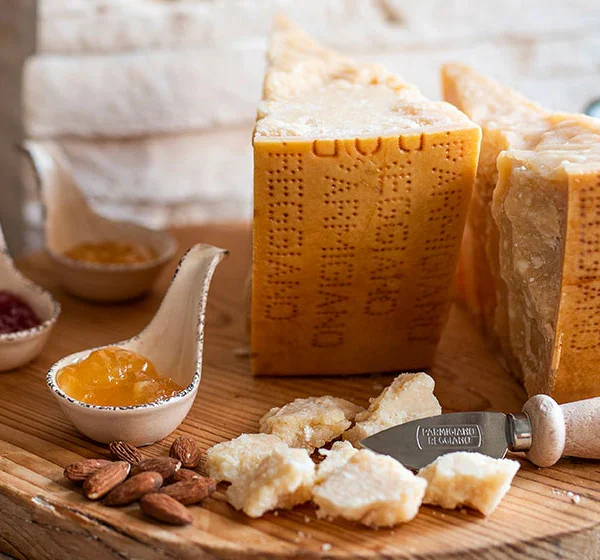
Genuine Traditional Balsamic Vinegar is not used as an ordinary condiment. Just a few drops are enough to bring out the best in simple, high-quality ingredients; remember that its purpose is not to mask the flavour of the food, but to complement it and bring out every nuance. The more traditional pairings include:
- Parmigiano Reggiano;
- fresh strawberries;
- risottos;
- beef fillets;
- grilled vegetables;
- cream or vanilla ice cream.
7. Behind every drop lie years of hard work
When you look at a bottle of Traditional Balsamic Vinegar, it is easy to forget how long it takes to produce it. Behind that small bottle lie years of daily care: constant checks, decanting, topping up, hot summers that slowly concentrate the must, and winters during which the product is left to rest.
It is a process that requires experience, patience and one in-depth knowledge passed down from generation to generation.
7 things to check before buying
| What to check | Why it is important |
|---|---|
| PDO designation | It guarantees the product’s origin and compliance with the production regulations. |
| The word “Traditional” | It distinguishes genuine balsamic vinegar from other types. |
| Ingredients | Only cooked grape must must be present. |
| Ageing | Minimum age: 12 years. |
| Perfume | Complex, elegant and lingering. |
| Texture | Natural, achieved over time. |
| Origin | Certified vinegar cellars in Reggio Emilia or Modena. |
Common misconceptions about balsamic vinegar
- “The thicker it is, the better it tastes.”
Not always. Density can be achieved in different ways. In the Traditional method, it is the result solely of natural ageing. - “The more it costs, the better it is.”
The price often reflects the time taken to produce the product and its rarity, but it is important to always check the product name and ingredients. - “It should be kept in the fridge.”
No. Simply keep it tightly sealed, away from direct light and sources of heat.
The best way to find out? Visit a vinegar factory.
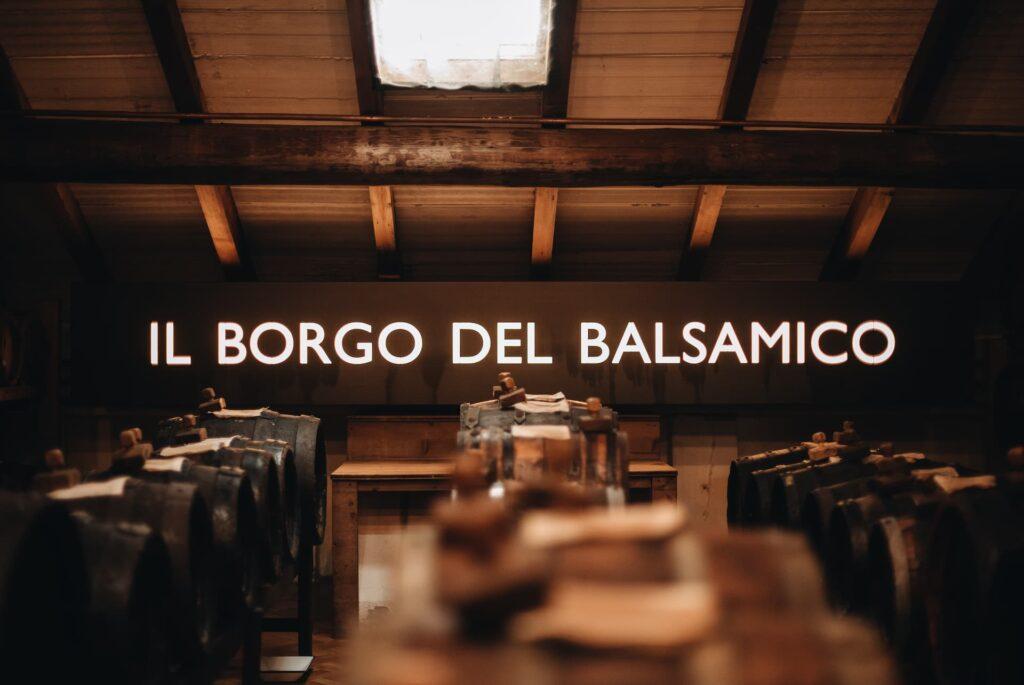
Reading a label is important, but nothing can replace the’first-hand experience. Stepping into a vinegar cellar means breathing in the scent of wood, gazing at the ancient rows of barrels and realising just how much time and dedication are needed to create a genuine Traditional Balsamic Vinegar.
At Borgo del Balsamico You can take part in guided tours and tastings which guide guests on a journey of discovery through one of Italy’s most fascinating culinary traditions. It is only by tasting balsamic vinegars of different ages and listening to the stories of those who tend to them every day that one can truly appreciate the value of this extraordinary product.
FAQ – Frequently Asked Questions
- Why does genuine Traditional Balsamic Vinegar cost more?
Because it requires at least twelve years of ageing, a lengthy artisanal process and a significant loss of product due to natural evaporation over time. - How long does a bottle last once it’s been opened?
If stored correctly, it retains its properties for many years. - Can it be used in the kitchen every day?
Yes, but as it is a highly concentrated product with a rich aroma, just a few drops are enough to enhance any dish.
Would you like to find out more about the world of Traditional Balsamic Vinegar of Reggio Emilia PDO? Book a tour of the Balsamico Borgo or browse our selection in the online shop and bring one of the most authentic gems of Italian tradition to your table.