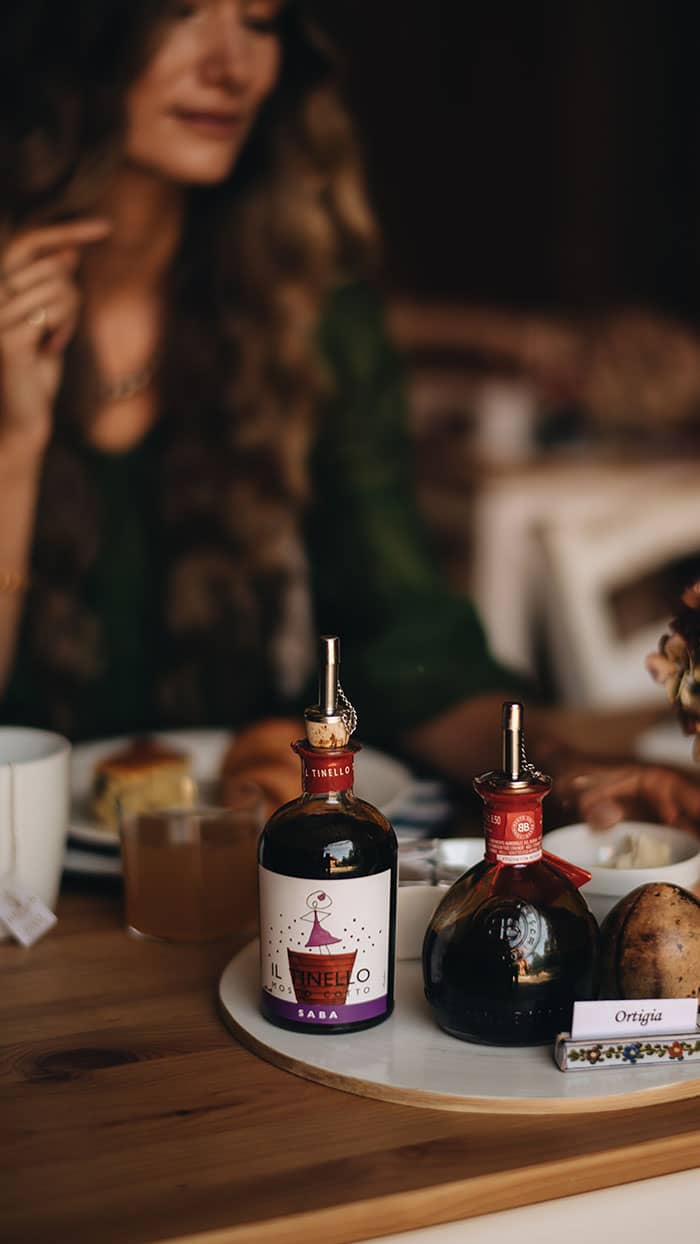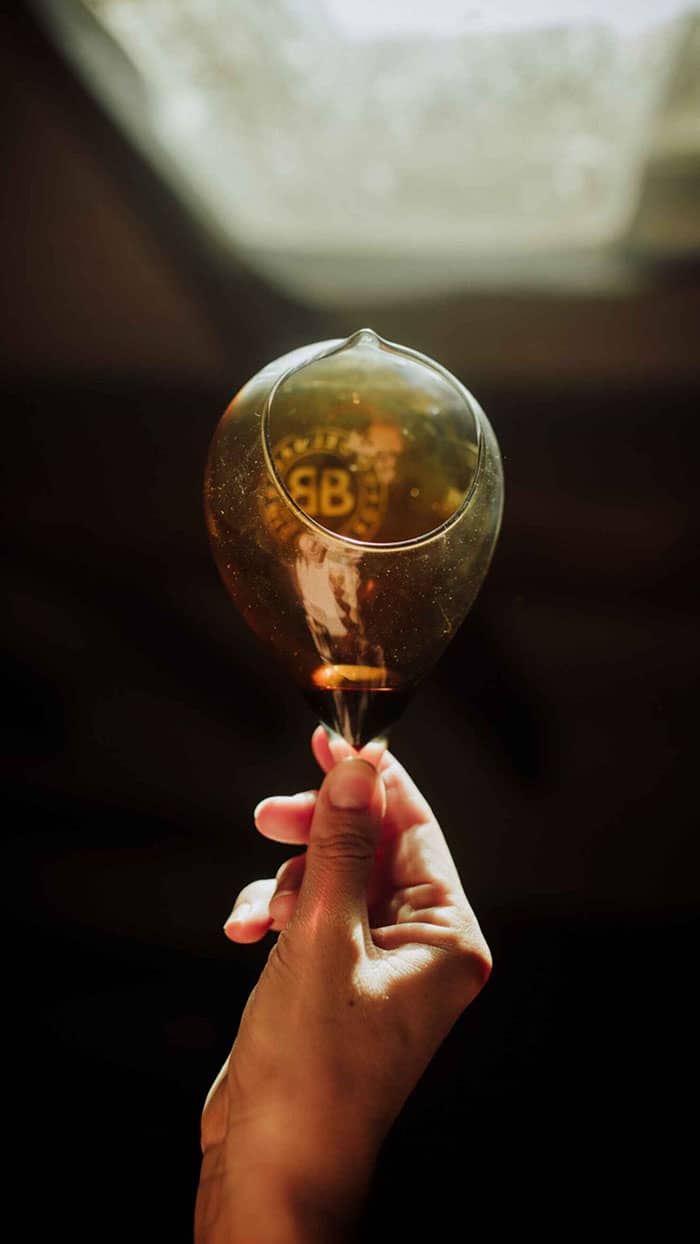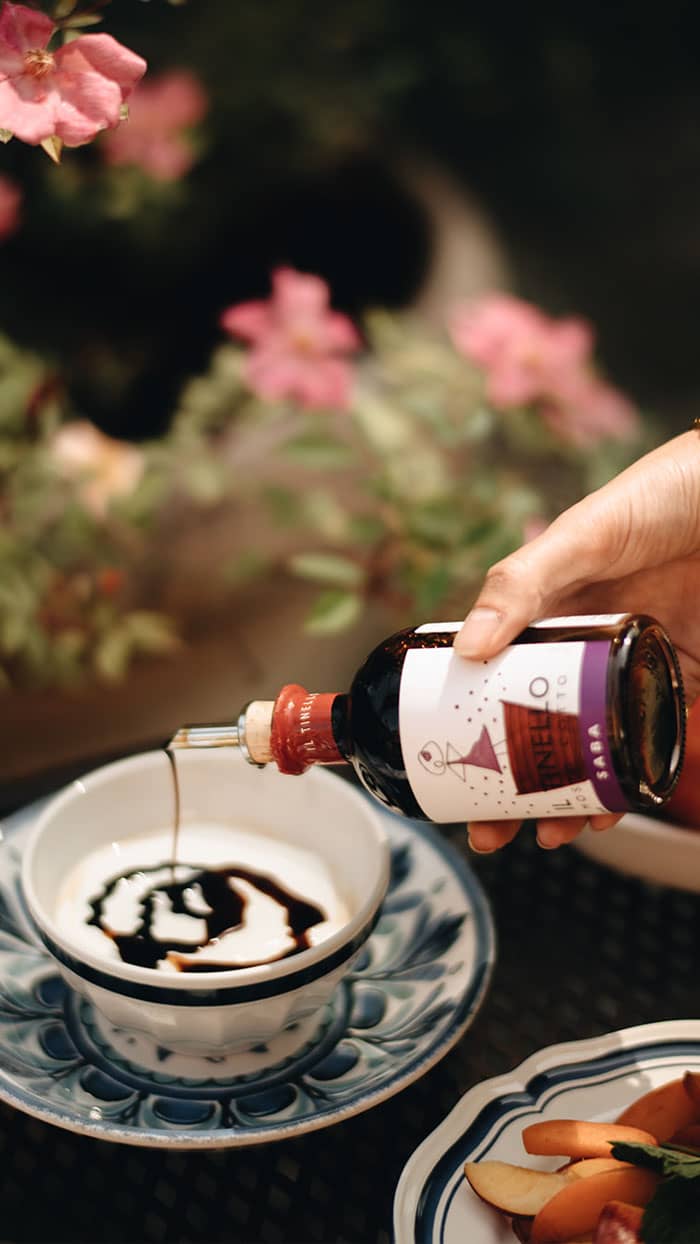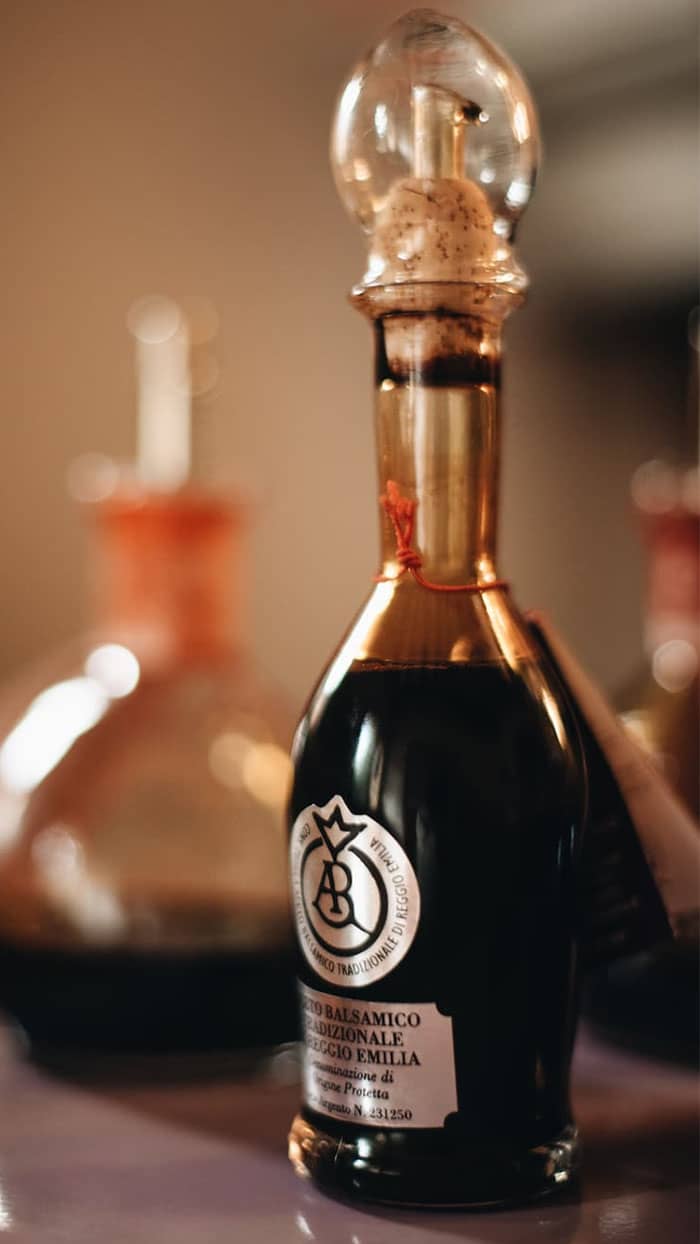
Have you ever wondered how traditional Reggio balsamic vinegar is produced? Today we tell you how this jewel, the crown jewel of our production, is made.
Every product of value and tradition is inextricably linked to the environment in which it originates and respect for a rigorous processing method. This is particularly true for the’Traditional Balsamic Vinegar of Reggio Emilia, which already bears the indication of its land of origin in its name.
Only here can vinegar like this be born: in these areas, the hot, dry summer and cold winter, which we may not be crazy about, nevertheless create the optimum conditions for the process of creating this nectar.
Traditional Balsamic Vinegar of Reggio is made from the must of Lambrusco grapes harvested in the province of Reggio Emilia.
But how is must transformed into balsamic vinegar? In the words of the specialists, “Traditional Balsamic Vinegar of Reggio Emilia is obtained from the sugar fermentation and acetic oxidation of cooked grape must from the pressing of grapes produced in the province of Reggio Emilia. In practice, the grapes are crushed and placed in vats. As soon as the marc and stalks emerge, the must is tapped, filtered, and cooked over low heat.
We then store it in containers where, with the first warmth, acetic fermentation begins. Once an alcohol content of 6/7 degrees is reached, colonies of bacteria are added. In this way we prepare the base that will be used to fill the barrels with different woods that, over the long period of ageing, give the Balsamic Vinegar its extraordinary characteristics.
Because the secret of Reggio's traditional balsamic vinegar is right here, in the ancient barrels made of different woods.
Each wood in fact adds a particular note: the chestnut contributes to the typical dark colour; the cherry tree sweetens the flavour; the mulberry concentrates it more quickly; the juniper flavours it and the oak, generally used for the smaller casks, gives the final, masterly touch.
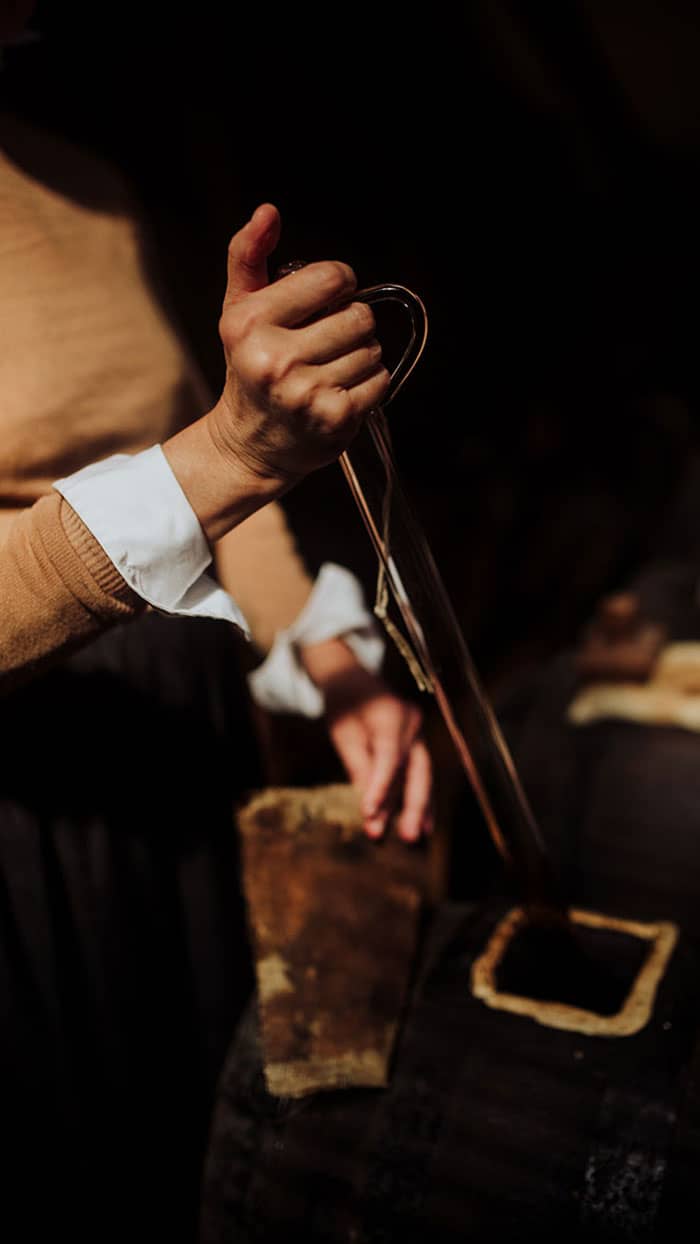
The number of small casks reaches, in some cases, up to 20, ranging from the 100 litres of the largest cask containing the cooked must to the 10 litres of the smallest cask from which the precious result of this long and skilful work is extracted.
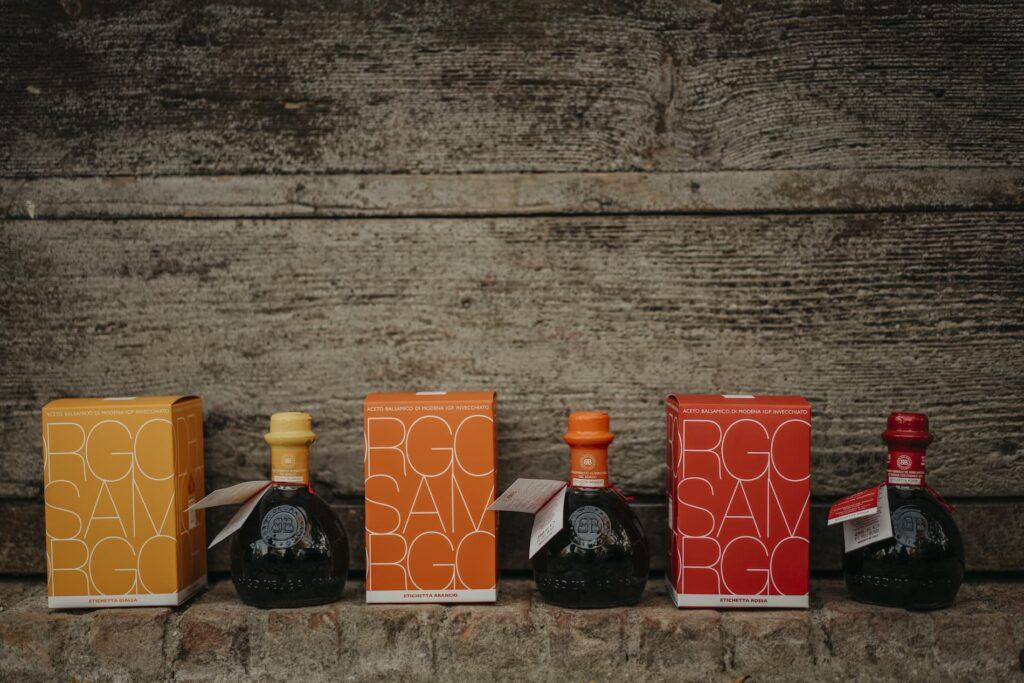
The most suitable rooms for maturing and ageing Balsamic Vinegar according to the traditional system are atticsour vinegar cellar, in fact, is located in the attic, which you can visit during the guided tourat the end of which we will let you taste three refinements of Traditional Balsamic Vinegar of Reggio Emilia PDO and three refinements of Balsamic Vinegar of Modena PGI.